There's a reason modern farmhouse remains one of the most searched home décor styles in America. It blends the warmth of country living with the clean lines of contemporary design — and wallpaper is one of the fastest, most impactful ways to capture that look.
Whether you're drawn to the graphic simplicity of shiplap, the softness of vintage botanicals, or the earthy weight of faux-linen texture, farmhouse wallpaper can transform a single wall — or an entire room — into something that feels intentional, lived-in, and unmistakably cozy.
This guide covers everything you need to know: the key styles, room-by-room ideas, accent wall tips, and how to choose the right modern farmhouse wallpaper for your home.

What Makes Modern Farmhouse Style Work?
Modern farmhouse is defined by its contradictions. It's rustic but refined, simple but layered, vintage but current. The core elements — shiplap boards, natural wood tones, muted neutrals, aged metals, and botanical motifs — create a visual tension that feels both relaxed and considered.
Wallpaper fits this aesthetic in a way that paint alone rarely can. A shiplap-print wallpaper brings texture without the cost and commitment of real wood boards. A vintage floral print adds the softness that anchors a farmhouse bedroom. Even a subtle linen-look texture can shift a room's mood from flat to warm.
The most successful modern farmhouse interiors don't over-theme. They pick one or two wallpaper moments and let the rest of the room breathe. Think of wallpaper as the architectural detail that paint can't provide — not wallpaper on every surface, but wallpaper in exactly the right place.

The Best Farmhouse Wallpaper Styles
Shiplap Wallpaper
Shiplap — the horizontal wood plank detail made famous by the wider farmhouse revival — is arguably the most searched wallpaper style in this category. And for good reason: it delivers an instantly recognizable farmhouse look without demolition, drywall work, or a contractor.
Shiplap wallpaper typically comes in white or off-white (to replicate painted wood), warm gray (for a weathered look), or natural wood tones (for an unpainted cabin feel). It works brilliantly as a farmhouse accent wall in living rooms and bedrooms, but can also cover a full room without feeling overwhelming — especially in light, muted colorways.
A few things to look for: horizontal lines should be clearly defined without being harsh, and the texture should have some variation to mimic real wood grain. Flat, uniform designs tend to look digital rather than architectural.


Vintage Floral Farmhouse Wallpaper
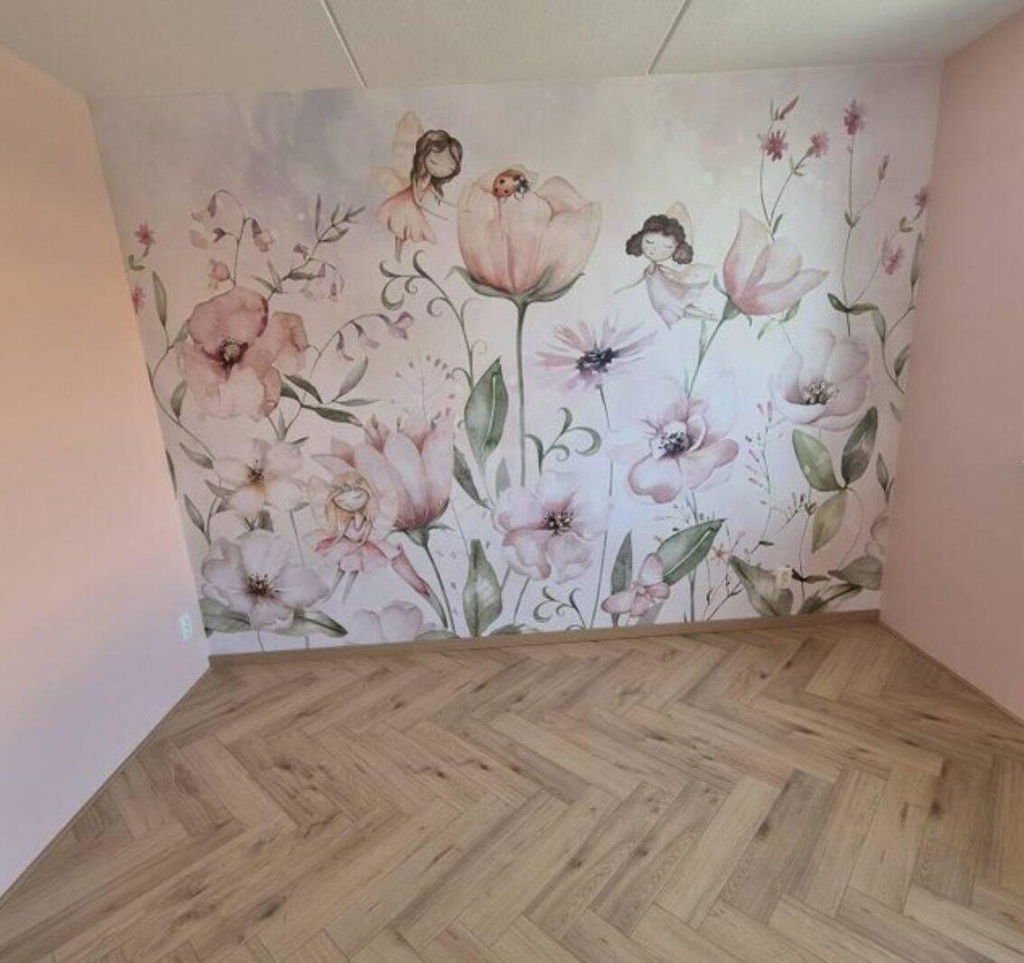
Oversized blooms, climbing roses, soft wildflower clusters — floral wallpaper is the softer counterpoint to shiplap's graphic structure. In a farmhouse context, the key is in the rendering: faded, hand-painted, watercolor-style, or vintage-botanical looks work much better than saturated digital florals.
Floral farmhouse wallpaper is most at home in bedrooms and bathrooms, where softness complements the intimate scale of the space. A single floral accent wall behind a bed, paired with white or cream on the remaining three walls, creates a warm focal point without tipping into maximalism.
Colors to look for: dusty rose, sage green, warm cream backgrounds, muted navy, and antique gold. These sit naturally alongside the neutral palette that defines modern farmhouse interiors.


Rustic Texture Wallpaper
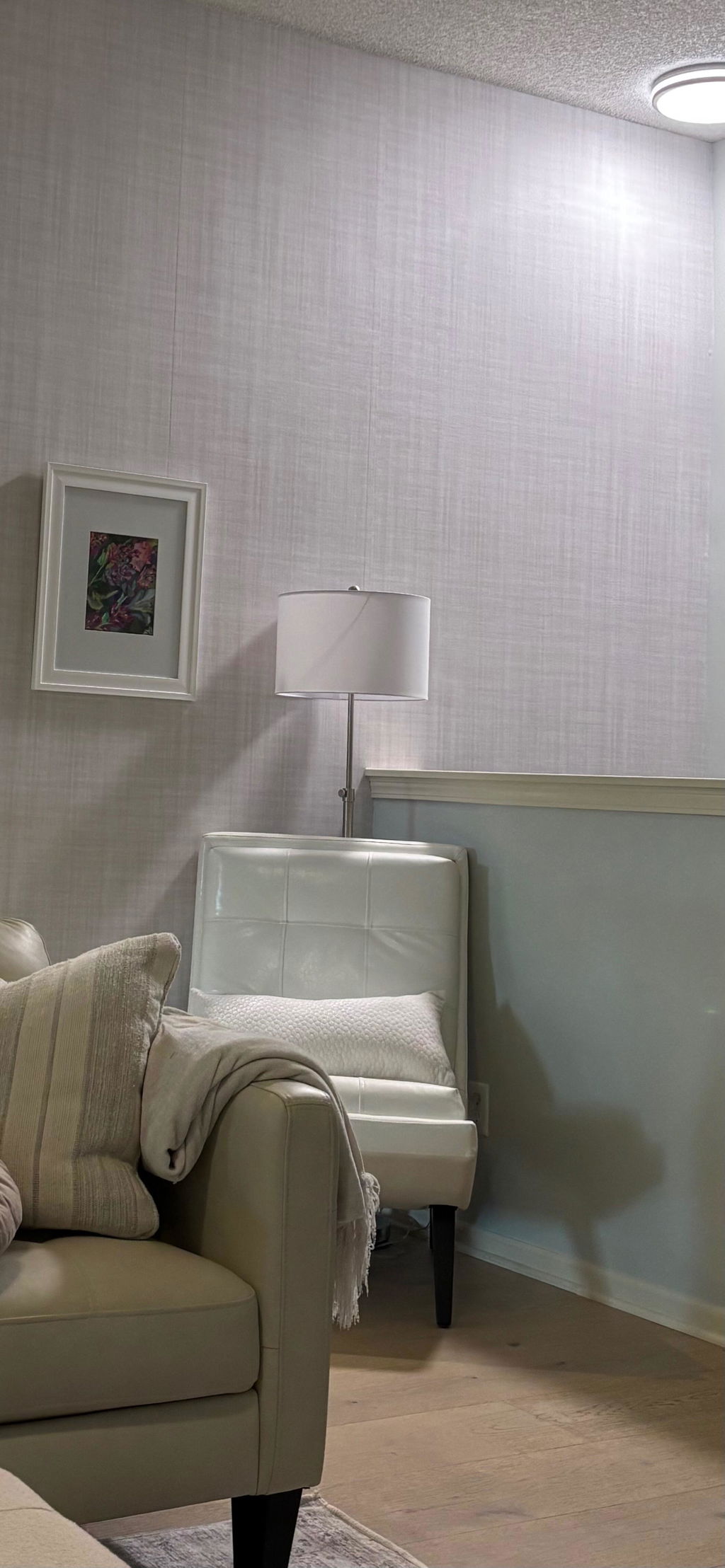
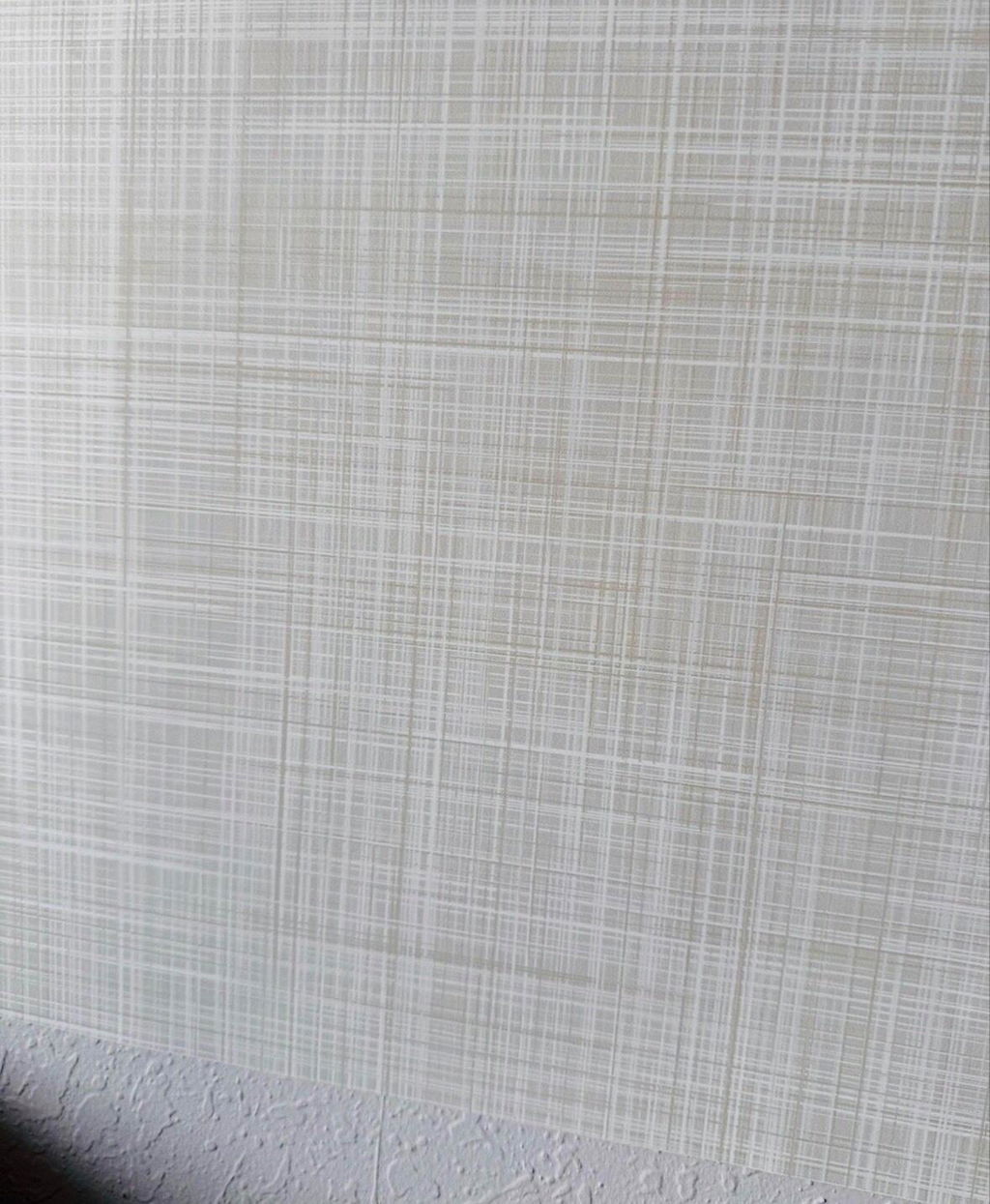
Not all farmhouse wallpaper needs a recognizable pattern. Texture-forward designs — faux linen weave, whitewashed brick, stone effect, or subtle wood grain — add depth and warmth to a room in a more understated way.
These work particularly well in spaces where you want a farmhouse feel without committing to a prominent pattern: a dining room, a mudroom, a home office. Rustic wallpaper also provides an excellent backdrop for layering — hanging an antique mirror, a cluster of iron hooks, or a piece of botanical art in front of a textured wall gives the whole composition more visual interest.


Ticking Stripe and Plaid
Two of the oldest textile patterns in American country design have found new life as farmhouse wallpaper: the ticking stripe (a narrow, even-spaced stripe originally used in mattress ticking) and plaid or buffalo check.
Ticking stripe works beautifully in kitchens, laundry rooms, and bathrooms — especially in navy-and-white or black-and-white colorways. Buffalo check is bolder and better used sparingly: as a single accent wall in a bedroom or mudroom, not across a full open-plan space.


Explore Farmhouse Wallpaper
Browse the full collection of farmhouse wallpaper.
Explore the CollectionRoom-by-Room Farmhouse Wallpaper Ideas
Living Room
The living room is where farmhouse wallpaper makes its biggest statement. A shiplap accent wall behind the main seating area or the fireplace surround is the most common approach — it anchors the room, creates a focal point, and adds the architectural detail that many modern homes lack.
For a slightly more layered approach, consider a half-wall treatment: shiplap wallpaper on the lower third, a painted chair rail, and a subtle texture above. This mirrors the classic wainscoting look common in historic American homes and works particularly well in dining-adjacent living spaces.
Color: white or soft off-white shiplap pairs with everything. For a moodier take, try a gray or weathered-wood tone — it reads as more sophisticated and works better with deep-toned furniture and darker accent colors.


Bedroom
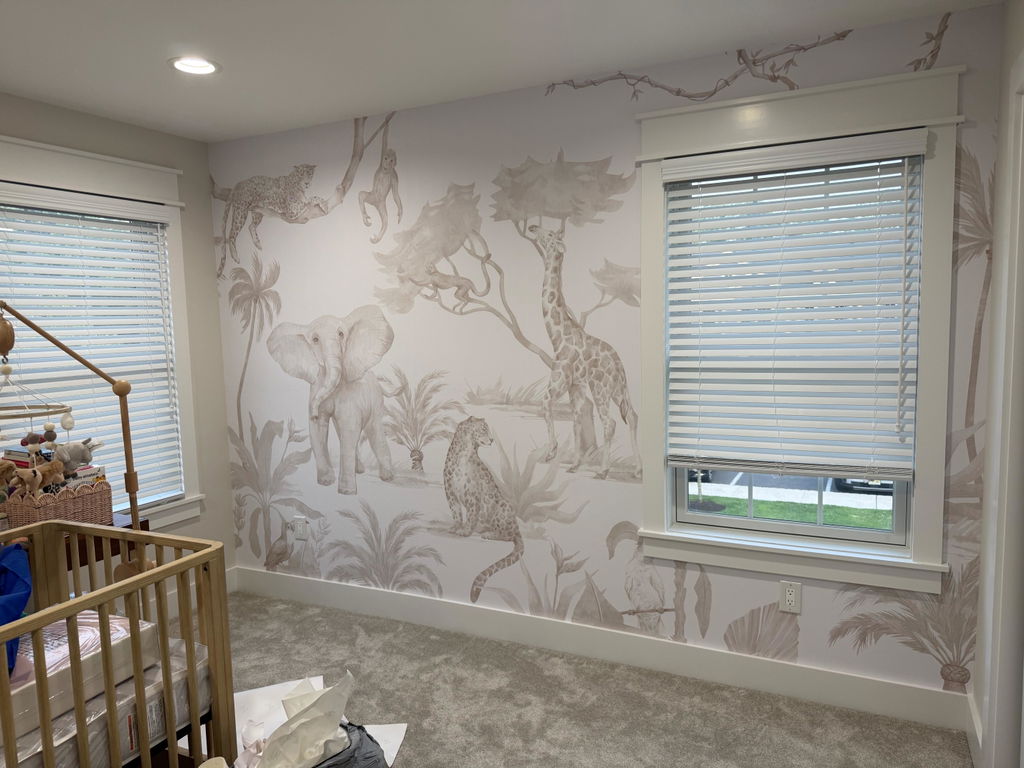
The bedroom rewards more delicate farmhouse wallpaper choices. A single accent wall behind the bed — either in a large-scale floral print or a soft textured design — gives the room a clearly defined focal point without requiring ceiling-to-floor coverage on every wall.
Vintage botanical prints, soft florals, and faded toile patterns work especially well here. Keep the remaining walls white or cream, and the contrast will make the accent wall feel considered rather than busy.
If you prefer something more neutral, a linen-look texture on all four walls creates a deeply cozy, enveloping feel — particularly in smaller bedrooms where a full pattern would feel cramped.


Kitchen and Dining Room
Farmhouse kitchens have a long tradition of distinctive wall treatments — beadboard paneling, subway tile, painted shiplap. Wallpaper can capture the same energy in a fraction of the time.
For kitchens, ticking stripe or small-scale plaid works well in the area above a backsplash or on a single focal wall, particularly if you're using peel-and-stick wallpaper that can be repositioned and replaced. Avoid heavily textured designs in cooking-adjacent areas where cleaning matters.
In the dining room, you have more freedom. A botanical or floral farmhouse wallpaper on the wall facing the table — with the remaining walls painted — creates a backdrop that elevates everyday meals. Vintage toile patterns in indigo, black, or rust on a cream ground feel particularly at home here.


Bathroom
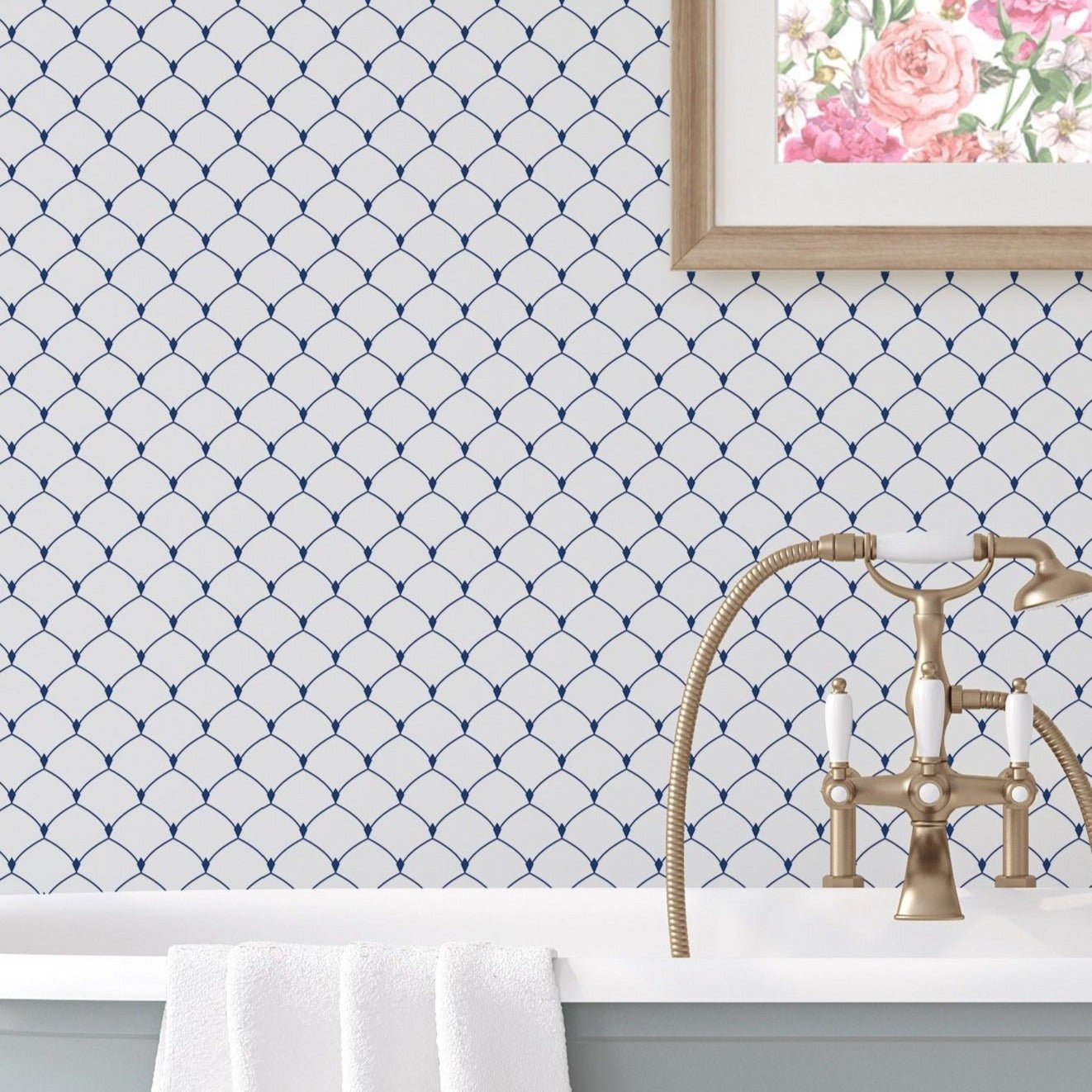
Farmhouse bathroom wallpaper tends toward the smaller and more detailed end of the pattern spectrum. Small-scale florals, delicate botanicals, narrow ticking stripes, and subtle texture designs all work well in the confined space of a bathroom.
One approach that's uniquely suited to bathrooms: a vintage botanical or herb print hung above a simple white tile dado mirrors the kind of decorative restraint found in authentic farmhouse interiors — the wallpaper brings warmth and character; the tile brings practicality.
For larger primary bathrooms with more space, a bold shiplap wallpaper on one wall — especially behind a freestanding tub — makes a strong farmhouse statement without overwhelming the room. If using peel-and-stick wallpaper in a bathroom, apply it only in areas that are not exposed to direct or frequent water contact to help maintain proper adhesion and durability.

How to Create the Perfect Farmhouse Accent Wall
An accent wall is the most approachable entry point for farmhouse wallpaper. Done well, it reads as intentional and architectural. Done poorly, it looks like an afterthought. A few principles make the difference.
Choose the right wall. The primary focal wall is almost always the right choice: the wall you see first when entering a room, the wall behind a bed or sofa, or the wall where a fireplace or TV already creates a natural anchor. Avoid accent-walling a surface that's broken up by windows, doors, or built-ins — the wallpaper loses impact.
Consider scale. Shiplap and ticking stripe read well at any wall width. Large-scale florals need room to breathe — at least 8 feet of uninterrupted wall height works best. Smaller patterns can feel busy if the wall is too large.
Think ceiling to floor. Farmhouse accent walls almost always look better running ceiling-to-floor without a break. Adding a picture rail or chair rail can create a deliberate layered look — but a half-hearted "stop 2 feet from the ceiling" effect looks unplanned.

Farmhouse Wallpaper Colors That Always Work
Color is as important as pattern in modern farmhouse design. The palette is intentionally restrained — warm neutrals, dusty muted tones, and a handful of earthy accents that ground the overall scheme.
Whites and off-whites are the backbone of farmhouse wallpaper design. Shiplap in bright white reads fresh and clean; in warm cream or antique white it reads softer and more vintage. Most farmhouse wallpaper works best on a light background.
Sage green is one of the most versatile farmhouse accent colors. Botanical prints with sage leaves or washed sage backgrounds work in virtually every room and pair naturally with wood tones and black iron hardware.
Dusty blue — particularly in the range from soft sky to faded denim — reads as traditional and grounded. It's a natural complement to white shiplap and works beautifully in bedrooms and bathrooms.
Warm gray and greige are the neutrals of choice for a more contemporary farmhouse look. They read as sophisticated rather than country, and pair easily with modern furniture while still anchoring the farmhouse base.
Rust, amber, and ochre appear as accents in botanical and floral farmhouse prints — they bring warmth without dominating. Use them in small doses: a single floral accent wall or a stripe on a kitchen wallpaper border.

Modern Farmhouse vs. Cottagecore: What's the Difference?
Modern farmhouse and cottagecore are closely related aesthetics that share a lot of visual vocabulary — florals, natural textures, vintage references, a preference for handmade and organic. But they diverge in emphasis.
Modern farmhouse is more structured and architectural. Clean lines, black iron hardware, and neutral palettes keep it grounded in contemporary interiors. It's practical and livable as much as it is decorative. The hallmarks are restraint and intention.
Cottagecore is more romantic and maximal. It leans into overgrown florals, vintage lace, mismatched china, whimsical illustration, and a general sense of nature pressing in through the windows. Where farmhouse restrains, cottagecore indulges.
In wallpaper terms: shiplap and ticking stripe are firmly farmhouse. Oversized climbing roses, wildflower meadow prints, and folk-art botanicals can serve either aesthetic depending on color and context. If you love the softness of cottagecore but want a farmhouse base, a muted botanical print in sage or dusty rose hits the overlap exactly.
Explore Cottagecore Wallpaper
Discover romantic florals, botanical prints, and charming cottage-inspired designs.
Explore the CollectionFrequently Asked Questions
What is the most popular farmhouse wallpaper style?
Shiplap wallpaper consistently ranks as the most searched and most purchased farmhouse wallpaper style in the US. It delivers the signature architectural look of real shiplap boards without installation costs, making it accessible to renters and homeowners alike. Vintage floral and rustic texture designs are close runners-up.
What's the difference between shiplap wallpaper and real shiplap?
Real shiplap involves installing horizontal wood planks directly to your wall — a construction project that requires carpentry skills, prep work, and significant investment. Shiplap wallpaper replicates the look using printed or embossed panels applied to your existing wall. Modern shiplap wallpaper designs include subtle texture and tone variation that closely mimic painted wood at a fraction of the cost and commitment.
Can I use farmhouse wallpaper in a kitchen?
Yes — with some considerations. Choose peel-and-stick wallpaper for kitchen applications, and use it in areas away from direct heat, steam, or constant splashing. A farmhouse kitchen accent wall — behind a breakfast nook, on a pantry wall, or above a beadboard-style lower half — works well. Avoid wallpaper directly above a stovetop or sink.
Is peel and stick wallpaper a good option for farmhouse style?
Peel-and-stick farmhouse wallpaper is an excellent option — particularly for renters, those who want to refresh a space without long-term commitment, or anyone new to wallpapering. Modern peel-and-stick products have improved significantly and are available in all the key farmhouse styles, including shiplap, floral, and rustic texture.
What colors work best with farmhouse wallpaper?
White, off-white, sage green, dusty blue, warm gray, and soft greige are the most reliable farmhouse-palette companions. The general principle: keep the base light and neutral, add warmth through wood tones and textiles, and let the wallpaper provide whatever pattern or texture moment the room needs.
How many walls should I wallpaper in a farmhouse-style room?
In most rooms, one accent wall — the focal wall — is enough. Modern farmhouse design leans toward restraint: a single wallpapered wall with painted surrounds reads as intentional and architectural. Full-room wallpaper works well for small, enclosed spaces like bathrooms, powder rooms, and bedrooms, where the scale creates a cozy, enveloping feel rather than an overwhelming one.