Mid-century modern design has a rare ability to feel nostalgic and contemporary at the same time. Defined by clean lines, expressive geometry, organic forms, and warm, earthy colors, the style continues to influence modern interiors decades after its original rise in popularity.
One of the easiest ways to introduce this aesthetic into a room is with mid century modern wallpaper. From understated geometric repeats to bold atomic motifs and 1970s-inspired color combinations, wallpaper can instantly establish a retro atmosphere without requiring a complete redesign.
But what exactly makes a wallpaper pattern mid-century modern? And how can you use retro designs without making your home feel like a time capsule? This guide explores the patterns, colors, and styling ideas behind the look.
Bring Mid-Century Style to Your Walls
Explore retro patterns, warm palettes, and timeless geometric designs.
Explore the CollectionWhat Is Mid-Century Modern Wallpaper?
Mid-century modern design broadly draws inspiration from interiors and architecture of the postwar decades, particularly the 1940s through the 1960s. The movement favored functional spaces, uncluttered forms, natural materials, and a sense of optimism about modern living.
Mid century modern wallpaper reflects many of the same principles. Instead of ornate traditional patterns, designs often feature simplified shapes, repeating geometry, abstract illustrations, and stylized natural forms.
Common motifs include:
- circles, ovals, diamonds, and arches;
- starbursts and atomic-inspired shapes;
- boomerangs and asymmetrical forms;
- abstract botanical elements;
- grids and repeating geometric patterns;
- curved lines and organic silhouettes.
The result is decorative but structured. Even bold patterns usually rely on clear repetition and recognizable visual rhythm, making them easier to integrate into contemporary rooms.

The Difference Between Mid-Century, Retro, and 70s Wallpaper
The terms mid-century, retro, and 70s are sometimes used interchangeably, but they represent slightly different aesthetics.
Retro wallpaper is the broadest category. It can reference almost any recognizable design style from previous decades, including the 1950s, 1960s, 1970s, and even later periods.
Mid-century modern designs tend to be cleaner and more restrained. They often combine geometric forms with muted or earthy palettes and plenty of visual structure.
By comparison, 70s wallpaper frequently pushes the same retro vocabulary further. Patterns become larger, curves become more pronounced, and colors can be warmer and more saturated. Mustard yellow, burnt orange, avocado green, chocolate brown, and cream are especially characteristic.
These styles overlap naturally, which means they can often work together within the same interior. A mid-century living room, for example, can accommodate a distinctly 70s-inspired feature wall when the furniture and surrounding colors provide enough visual balance.

Iconic Mid-Century Modern Wallpaper Patterns
Pattern is one of the defining elements of this aesthetic. While there is no single motif that represents the entire era, several types of design are particularly recognizable.
Geometric Retro Wallpaper
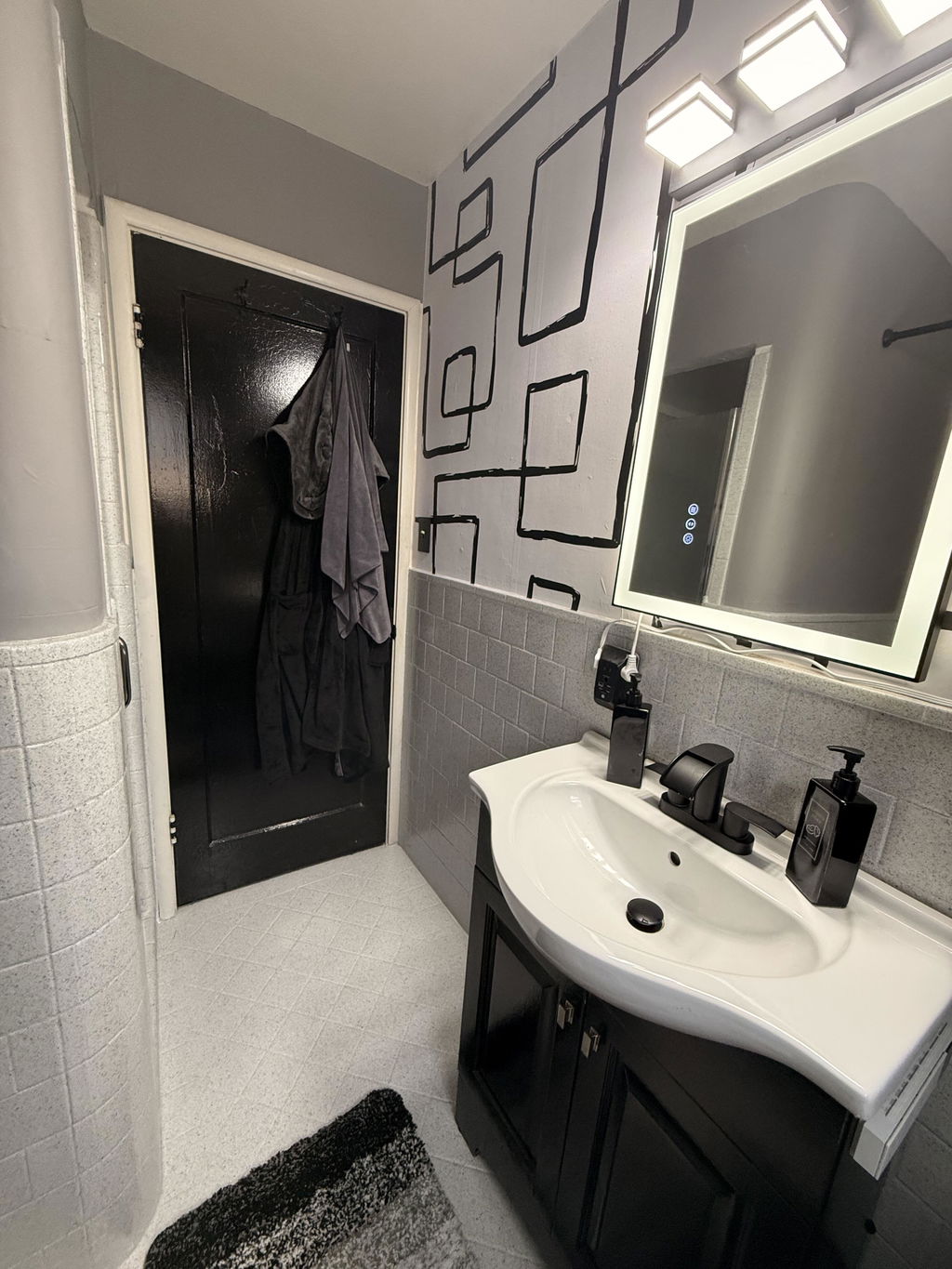
Geometry is central to mid-century design. Squares, circles, triangles, diamonds, and irregular abstract shapes can be arranged into repeating compositions that feel ordered without becoming overly formal.
Geometric retro wallpaper works particularly well in spaces where you want visual interest without relying on floral or illustrative designs.
Smaller repeating patterns can create a subtle backdrop for furniture, while oversized geometry makes a much stronger statement. The latter is particularly effective on an accent wall behind a sofa, dining table, bed, or console.
The key is scale. Large patterns naturally attract attention, while smaller geometry tends to function more like texture when viewed from across the room.


Organic and Abstract Forms
Not every mid-century pattern relies on strict geometry.
Designers of the period frequently combined modernist simplicity with shapes inspired by leaves, stones, branches, and other natural forms. Rather than realistic botanical illustrations, however, these elements were often heavily stylized.
This creates a softer alternative to classic geometric wallpaper.
Organic abstract patterns can be especially effective in bedrooms, dining rooms, home offices, and reading spaces where you want mid-century character without an overly graphic appearance.


Warm Palettes That Define the Retro Look
Color is just as important as pattern when creating a convincing mid-century interior.
Some of the most recognizable combinations are built around warm, earthy tones:
- Mustard yellow and brown create an unmistakably vintage palette that pairs beautifully with walnut and teak furniture.
- Burnt orange and cream offer a warmer, brighter interpretation of retro design and can make a living or dining room feel particularly inviting.
- Olive or avocado green brings a natural quality to mid-century interiors and works well alongside wood, leather, and neutral textiles.
- Terracotta and beige provide a softer contemporary interpretation of the aesthetic. This combination is useful when you like retro design but want the finished room to feel calmer.
- Teal and warm neutrals add contrast while preserving the sophisticated character associated with mid-century interiors.


How to Use 70s Wallpaper Without Overwhelming a Room
One reason homeowners hesitate to use 70s wallpaper is its reputation for oversized patterns and strong colors. But bold wallpaper does not necessarily mean a visually overwhelming room.
The easiest approach is to choose one dominant feature.
If the wallpaper has a large orange, brown, and mustard pattern, keep major pieces of furniture relatively simple. A neutral sofa, wooden coffee table, and a few accessories that repeat one or two wallpaper colors can create a cohesive look without competing for attention.
An accent wall is another practical option. It allows a dramatic retro pattern to become the focal point while the remaining walls provide visual relief.
For a more immersive interior, wallpaper can also cover the entire room. In that case, consider a smaller pattern or a slightly more subdued palette.

Where Does Mid-Century Modern Wallpaper Work Best?
The versatility of mid-century design means it can work in almost any room, although the pattern and scale should reflect how the space is used.
Living Room
The living room is an ideal place for expressive mid century modern wallpaper. A geometric or retro-futuristic pattern behind the sofa can anchor the entire seating area.
Pair it with streamlined furniture, tapered legs, warm wood, and simple lighting to reinforce the aesthetic.


Bedroom
Bedrooms generally benefit from softer patterns and less aggressive contrast. Consider muted geometry, organic shapes, or a retro pattern in beige, olive, terracotta, or dusty orange.
Wallpaper behind the headboard can also replace the need for additional wall art.


Bathroom
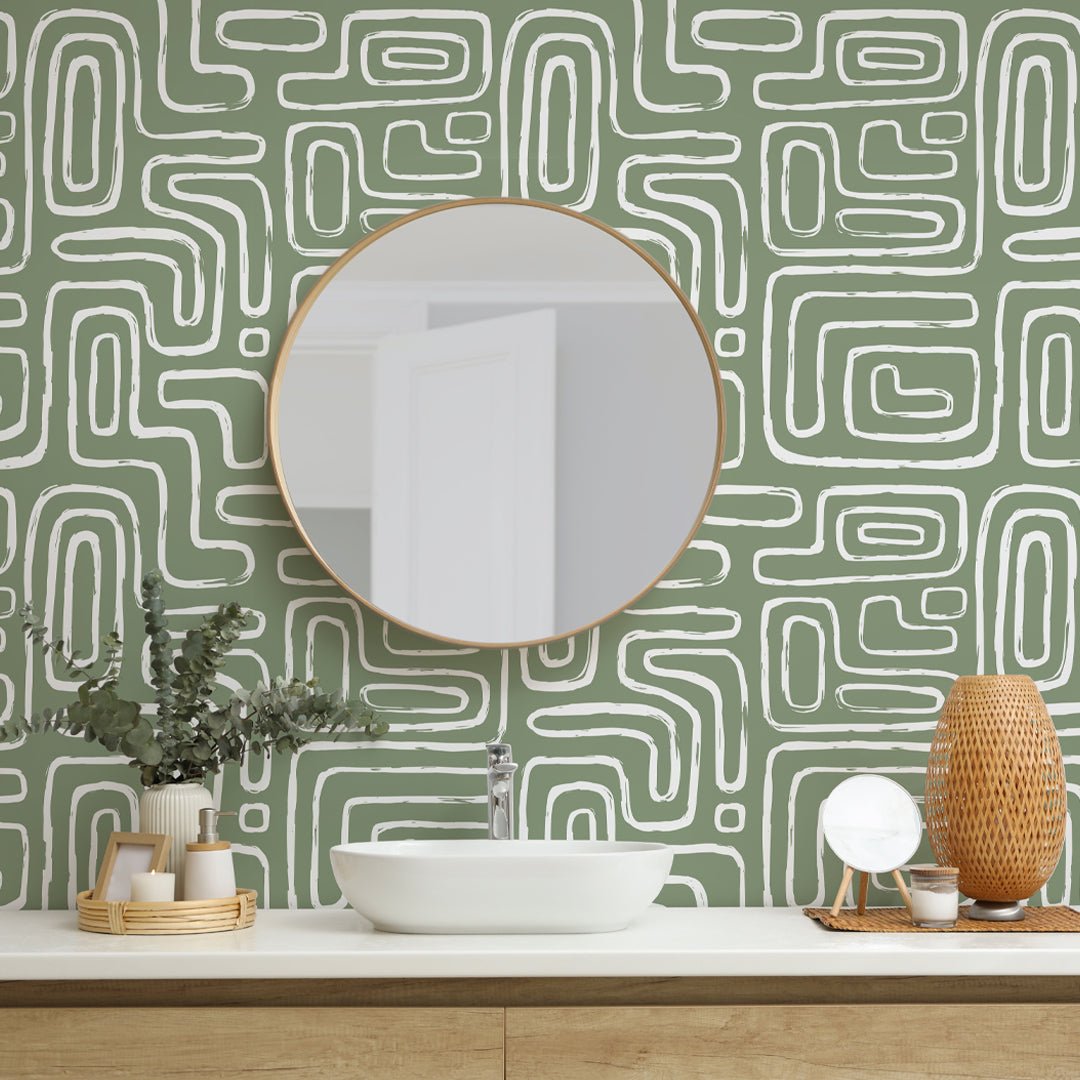
Bathrooms are a great place to experiment with stronger retro patterns because the smaller space allows bold designs to make an impact without overwhelming the room.
Bold retro wallpaper can add character and warmth, especially when paired with simple fixtures, natural wood, and neutral finishes.

Home Office
A home office is a good opportunity to experiment with smaller geometric designs. A structured repeating pattern can add personality while maintaining the clean, organized appearance associated with mid-century modern interiors.


Entryway
Small spaces do not always require small patterns. In fact, an entryway or hallway can be an excellent place to use dramatic geometric retro wallpaper because the limited wall area prevents the design from dominating the entire home.


See how any of these wallpaper styles could look in your own room before making your choice.
How to Pair Retro Wallpaper With Furniture
Wallpaper works best when it feels connected to the rest of the room rather than added as an isolated decorative element.
Wood is one of the easiest materials to combine with mid-century patterns. Walnut, teak, and other warm finishes naturally complement mustard, orange, olive, cream, and brown.
Furniture silhouettes matter as well. Pieces with tapered legs, low profiles, clean edges, and gentle curves reinforce the aesthetic without requiring every item to be authentically vintage.
You can also mix old and new.
A contemporary sofa can sit comfortably against a playful retro pattern, while a vintage-inspired armchair can add character to a room with a more restrained geometric backdrop. The goal is not to recreate a perfect 1960s interior but to borrow the elements that make the era visually distinctive.

Mid-Century Modern vs. Art Deco Wallpaper
Mid-century modern and Art Deco both make extensive use of geometry, but their visual languages are quite different.
Art Deco is associated with symmetry, glamour, ornamental geometry, metallic details, and luxurious combinations such as black and gold. Patterns frequently feature arches, stepped forms, and highly structured repetition.
Mid-century modern design is typically more casual and organic. Its geometry can be asymmetrical, playful, and influenced by nature or Atomic Age imagery. Colors also tend to lean toward earthy greens, oranges, yellows, browns, and warm neutrals.
If Art Deco wallpaper creates a sense of polished elegance, mid-century retro wallpaper generally creates a warmer, more relaxed atmosphere.


Creating a Modern Interior With Retro Character
The most successful mid-century-inspired interiors rarely copy a historical room exactly. Instead, they combine recognizable retro elements with contemporary functionality.
Start with one or two strong references: perhaps a bold wallpaper pattern and a walnut sideboard, or a retro-futuristic print paired with a sculptural lamp. Then allow contemporary furniture, neutral fabrics, and simple accessories to balance the room. If you prefer a broader contemporary aesthetic rather than a distinctly retro look, explore modern wallpaper designs that use clean lines, updated geometry, and versatile color palettes.
This approach keeps the aesthetic intentional rather than theatrical.
Whether you prefer restrained geometry, playful atomic wallpaper, or the warmer colors and larger patterns associated with 70s wallpaper, mid-century design offers plenty of room for individual interpretation.

Bring Mid-Century Style to Your Walls
Mid-century modern wallpaper can transform a plain room through pattern, color, and a carefully measured dose of nostalgia. Geometric compositions provide structure, atomic motifs introduce playful retro energy, and warm palettes make the space feel inviting.
The key is balance. Choose a pattern that suits the scale of your room, coordinate it with a few complementary colors and materials, and give stronger designs enough space to stand out.
From subtle geometric retro wallpaper to bold 70s-inspired patterns, the right design can capture the character of the past while still feeling completely at home in a modern interior.
Find Your Perfect Mid-Century Wallpaper
Explore the full collection of mid-century wallpaper designs.
Explore the Collection